CHEST PAIN: A Life-Threatening Symptom Decoded
(I sit up straight, my expression turning gravely focused. This is the symptom that demands immediate, structured analysis. A misstep here is not an academic error; it is a potential catastrophe.)
Dr.Muhammad Asif Malik
5/8/20244 min read
Initial Impression & Probable Syndromes
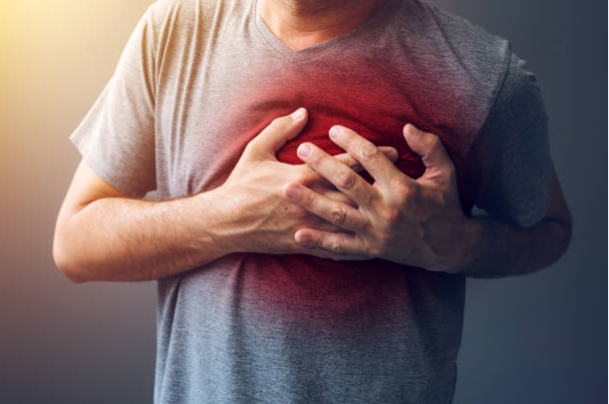
Chest pain is not a single diagnosis. It is a critical alarm signal emanating from one of three vital systems in the thorax. Your first task is to instantly categorize it:
Cardiac/Ischemic Syndrome: Pain due to myocardial oxygen supply-demand mismatch. This is the "must not miss."
Pulmonary/Plural Syndrome: Pain from lung parenchyma, pleura, or pulmonary vasculature.
Musculoskeletal/Gastrointestinal Syndrome: Pain from chest wall structures or referred pain from abdominal organs (e.g., esophagus).
Why is this so urgent? Because the pretest probability of a life-threatening condition like Acute Coronary Syndrome (ACS) or Pulmonary Embolism (PE) is high, and the window for intervention is narrow.
The "Mental List": Why Each Descriptor is a Diagnostic Filter
We ask these specific questions to rapidly triage the patient's risk. Each answer shifts the probability up or down our ranked differential.
QuestionWhat It AsksWhy It's Critically ImportantPathophysiological Link1.
LOCATIONWhere exactly is the pain?Different structures have different somatic pain referral patterns.Visceral pain (heart, esophagus) is poorly localized. Somatic/parietal pain (pleura, chest wall) is well-localized.
2. CHARACTERWhat does it feel like?The quality of pain is often disease-specific.Ischemic pain is visceral: heavy, pressing. Inflammatory pain (pleuritic, pericarditic) is sharp, somatic.
3. RADIATIONDoes it travel anywhere?Radiation patterns are classic for specific serious conditions.Pain follows shared spinal cord dermatomes or nerve pathways from the affected organ.
4. PROVOCATION/PALLIATIONWhat brings it on? What relieves it?Reveals the mechanical relationship of the pain.Links pain to myocardial workload (exertion), muscle use (movement), or acid exposure (meals, antacids).5. ASSOCIATED SYMPTOMSWhat other symptoms occur with it?Identifies involved organ systems and severity.Points to autonomic activation (nausea, sweating in MI), respiratory compromise (dyspnea in PE), or GI dysfunction.
Deep Dive: Applying the Framework - The Example of Angina vs. Pleurisy
Let's see how these questions separate two common causes: Stable Angina (cardiac) and Viral Pleurisy (pulmonary).
FeatureStable Angina (Cardiac Ischemia)Viral Pleurisy (Pulmonary/Pleural)
LOCATIONRetrosternal (behind breastbone), diffuse. "A fist in the center of my chest."Lateral, well-localized to one side. "Right here, on my left side."
CHARACTERPressure, heaviness, squeezing, tightness. "An elephant sitting on my chest."Sharp, stabbing, knife-like. Clearly increases with breathing.
RADIATIONClassic to left arm, jaw, neck, or back. (Shared dermatomes T1-T4).Stays local. May radiate to shoulder if diaphragmatic pleura irritated (phrenic nerve C3-C5).
PROVOKED BYPhysical exertion, emotional stress, cold weather. (Increases myocardial O2 demand).Deep inspiration, coughing, sneezing. (Stretches inflamed parietal pleura).RELIEVED BYRest (decreases O2 demand) or Nitroglycerin (vasodilates coronaries).Holding breath, shallow breathing, lying on affected side (splints the area).
ASSOCIATED SYMPTOMSDyspnea, nausea, diaphoresis (cold sweat), anxiety.Fever, cough, preceding URI symptoms.PATHOPHYSIOLOGYAtherosclerotic plaque limits coronary flow. During stress, demand exceeds supply → ischemia → lactic acid buildup & adenosine release → pain.Viral infection causes inflammation of the parietal pleura (which is richly innervated with pain fibers). Movement rubs inflamed surfaces.
In my experience, a patient who clenches a fist over their sternum (Levine's sign) and describes a "vise-like" pressure radiating to the jaw is painting a textbook picture of cardiac pain until proven otherwise. Conversely, the young patient who winces with each breath and points precisely to a spot is giving you the story of pleurisy.
Schematic Diagnostic Approach ("The Clinic Workup")
This is a tiered, risk-stratification process.
First 2 Minutes (Bedside):
ABCs & Vital Signs: Pulse, BP (both arms?), Respiration, O2 saturation.
Targeted Physical Exam: Cardiac (murmurs, rubs), Pulmonary (breath sounds, percussion), Chest Wall (reproducible tenderness on palpation), Abdomen (epigastric tenderness?).
12-Lead ECG: This is not a test you 'order.' It is an extension of the physical exam done immediately. Look for ST changes, new LBBB, T-wave inversions.
Basic Labs/Imaging (First Hour):
Cardiac Troponin (hs-Troponin): The gold-standard biomarker for myocardial necrosis.
Chest X-Ray: Look for pneumonia, pneumothorax, wide mediastinum (aortic dissection).
D-Dimer: Only if low pre-test probability for PE (using Wells' Criteria). A positive D-Dimer is not diagnostic; it means you need a CT Pulmonary Angiogram (CTPA).
Secondary/Specialist-Driven Tests:
Echocardiogram: For wall motion abnormalities (MI), pericardial effusion, aortic dissection.
CTPA: For suspected PE.
CT Aorta: For suspected dissection.
Coronary Angiography: The definitive test for coronary artery disease.
Upper GI Endoscopy/Ambulatory pH Monitoring: For refractory suspected GERD.
Principles of Management: The First Actions
Management is dictated by the suspected syndrome.
If Cardiac Ischemia is Suspected:
MONA is the old mnemonic, but Aspirin (162-325 mg chewed) and Nitroglycerin (if BP permits) are first-line in clinic.
Immediate referral/transfer to an emergency cardiac facility. Time is muscle.
If Pulmonary Embolism is Suspected:
Do not delay. Immediate anticoagulation (if high probability) and CTPA.
If Musculoskeletal/GERD:
Non-Pharmacological: Rest, posture advice, diet modification for GERD.
Pharmacological: NSAIDs (for inflammation), PPIs (for GERD).
Clinical Pearls & Caveats
A Pearl: "All that wheezes is not asthma, and all that grips the chest is not the heart." A "tearing" pain radiating to the back is aortic dissection until proven otherwise. Esophageal spasm can mimic angina perfectly, even responding to nitroglycerin (which also relaxes smooth muscle).
A Caveat: "Silent MI" is common, especially in diabetics and the elderly. They may present only with dyspnea, fatigue, or nausea. Never dismiss the absence of 'typical pain' in a high-risk patient.
The Long View: For non-cardiac chest pain, patient education and reassurance are half the cure. A patient who leaves knowing their pain is musculoskeletal, not a heart attack, has their quality of life restored. For cardiac pain, lifelong secondary prevention and risk factor modification become the cornerstone of management.
In essence, evaluating chest pain is an exercise in rapid, probabilistic reasoning. You are not just diagnosing a disease; you are ruling out death. Every question has a purpose, and every answer narrows the path towards safety or sounds the alarm for urgent action.
Dr. Asif Malik
Help
24/7 AI symptom checker and doctor booking
Contact
Connect
apnaonlinedoctor@gmail.com
+92-300-6331968
© 2026. All rights reserved.